
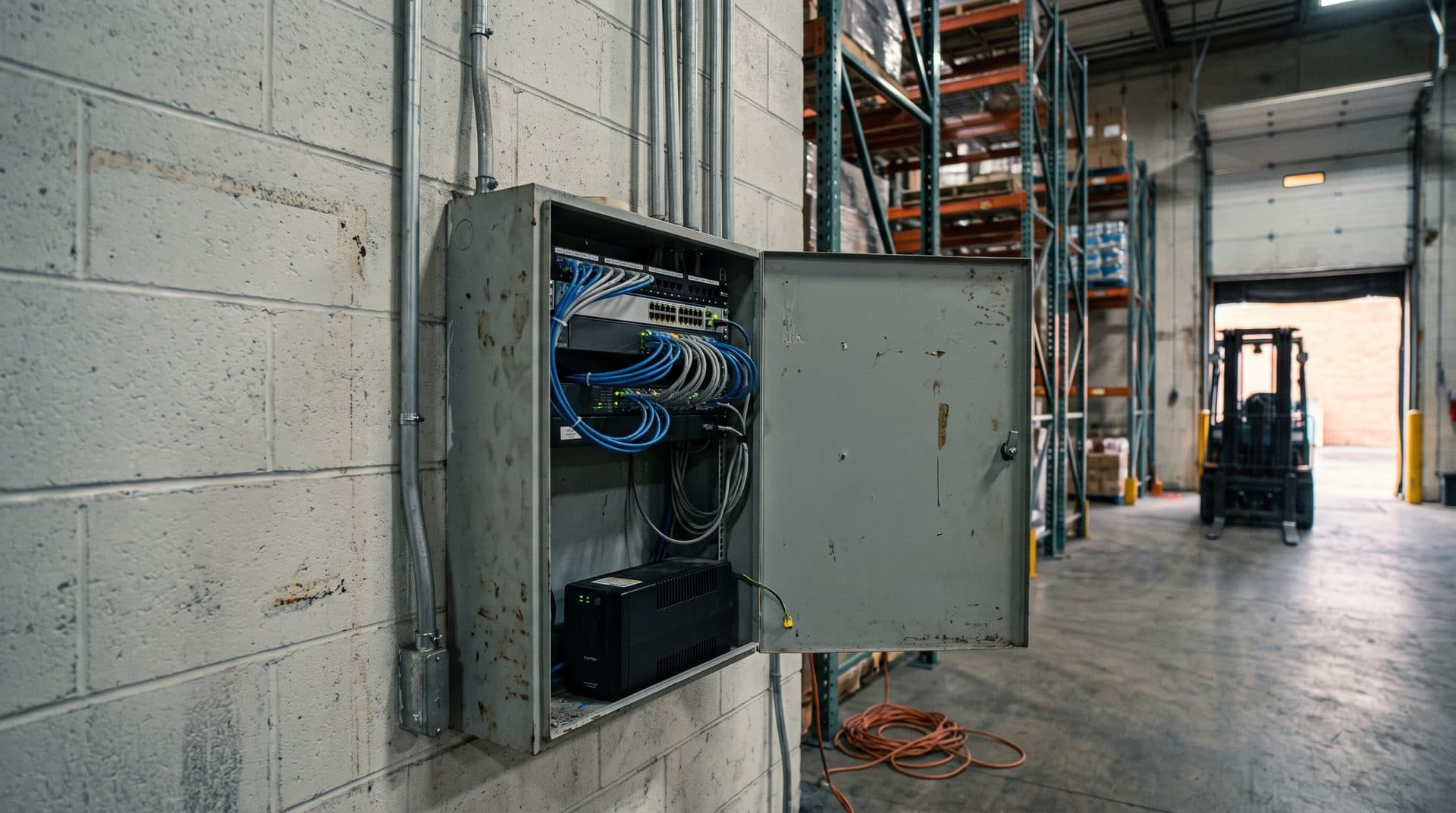
Managed IT / Core Infrastructure
Keep the infrastructure aligned with the operation.
Managed IT and co-managed IT services for distributors start with the systems, people, and handoffs that keep product moving. Infrastructure decisions need to reflect the work happening at each location.
A branch is more than another office
Connectivity at a sales counter, access at a warehouse terminal, and a server supporting the ERP have different consequences when they fail. Start with the work each system supports and the dependencies between locations.
Define the managed environment
Networking, servers, cloud, endpoints, identity, monitoring, patching, and backup belong in one operating picture. Your agreement identifies the systems covered, access requirements, maintenance responsibilities, vendor handoffs, and the work Narium is assigned to perform.
Co-managed IT adds a bench, not a replacement plan
Some teams need an external IT owner. Others have an internal person who knows the operation and needs additional coverage or specialist support. In a co-managed engagement, that person retains business context while responsibilities, approvals, reporting, and escalation are agreed explicitly.
Write down who owns what
Co-managed IT works when the responsibility split covers more than tasks. It should make clear who performs the work, who approves changes, who communicates during an incident, and when a vendor or specialist takes the next step.
- Business priorities and approvals
- NariumWorks within the responsibilities assigned in the agreement and records the operating context needed to support them.
- Your teamA designated client leader retains business context and approves access or changes as defined in the engagement.
- Admin access, maintenance windows, reporting, and incident communications are agreed rather than assumed.
- Help desk, endpoints, and infrastructure
- NariumMay provide contracted help desk, endpoint, network, Wi-Fi, firewall, server, identity, monitoring, backup/DR, cloud, and patching support.
- Your teamKeeps the business and operational context that determines what is critical and when work can occur.
- Specialized scanners, label printers, handhelds, and counter terminals receive only the troubleshooting and vendor coordination included in the agreement.
- Operational systems and vendors
- NariumMay provide agreed troubleshooting, access administration, vendor-ticket coordination, integrations, underlying infrastructure, and configuration support.
- Your teamRetains the vendor and application relationships that are not assigned to Narium and helps define the operational impact of an interruption.
- Epicor Eclipse is Narium’s confirmed hands-on ERP depth. Other ERP, WMS, and EDI work is scoped before it is promised.
- Escalation and specialist work
- NariumCan receive direct tickets, coordinate an escalated vendor issue, communicate status, and perform in-scope remediation.
- Your teamMay perform initial warehouse or IT checks and identifies when a physical location or business decision requires its involvement.
- On-site work, physical cabling, WMS configuration, EDI mapping, warehouse automation, and specialist incident response are not assumed to be included.
Agree coverage and escalation before an interruption
Narium has 24/7/365 remote and on-site availability. The actual coverage, response targets, remote or on-site work, dispatch, and any additional charges are defined in the agreement and vary with severity, urgency, and operational impact. A warehouse, branch, ERP, identity, network, or device symptom can require different people and vendors; the escalation path should be written down before the interruption.
Start with the systems and the owners
Bring an outline of your locations, critical systems, existing providers, and internal responsibilities. We use that conversation to establish fit, define the work that needs a clear owner, and identify where an internal team needs support. For day-to-day user issues, see Help Desk and Support.
Connected work
Explore the systems and responsibilities around it.
Help Desk and Support
A user needs more than a ticket number when an order is waiting. Describe what stopped, where it happened, and which part of the operation is affected.
Explore →ERP Services
Managed IT for distributors needs to account for the system behind purchasing, inventory, and order release. Narium brings hands-on Epicor Eclipse experience to that conversation.
Explore →Warehouse and Inventory Systems
Inventory, picking, labels, and fulfillment depend on connected systems. A warehouse issue needs to be understood in the context of how product actually moves.
Explore →Cybersecurity
Protecting an industrial business starts with understanding its users, systems, access, and operational dependencies. Controls need clear ownership and a place in everyday work.
Explore →Your next step
Bring the problem your team is working around.
Tell us about your operation, the systems involved, and where you need help.
Start a conversationFree initial consultation, no commitment.